


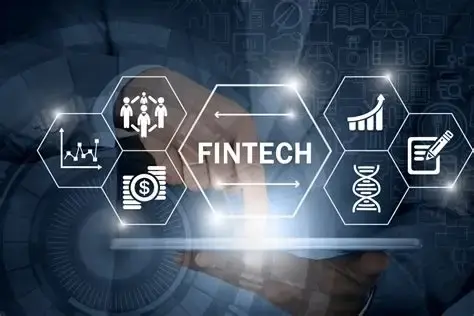
The global financial industry is undergoing one of the most significant transformations in its history. Driven by rapid technological advancement, changing consumer expectations, and the demand for efficiency, fintech has emerged as a powerful force reshaping how financial services are delivered, accessed, and experienced.
Fintech—short for financial technology—is no longer a niche segment. It has become a central pillar of modern economies, influencing everything from banking and payments to lending, insurance, and investment management. As digital innovation continues to accelerate, fintech is redefining the global financial landscape in ways that were unimaginable just a decade ago.
The Shift from Traditional Banking to Digital Finance
For decades, traditional financial institutions operated on legacy systems that were often slow, complex, and limited in accessibility. Customers had to rely on physical branches, manual processes, and restricted operating hours.
Fintech has fundamentally changed this model.
Today, consumers can open accounts, transfer funds, apply for loans, and manage investments entirely online—often within minutes. Digital wallets, mobile banking apps, and online payment systems have replaced traditional methods, offering convenience, speed, and flexibility.
This shift is not just about technology—it’s about reimagining the entire customer experience. Fintech companies prioritize user-centric design, ensuring that financial services are intuitive, accessible, and available anytime, anywhere.
Revolutionizing Payments and Transactions
One of the most visible impacts of fintech is in the payments sector. Digital payment solutions have transformed how individuals and businesses conduct transactions.
From contactless payments and QR codes to peer-to-peer transfers and international remittances, fintech has made transactions faster, cheaper, and more secure. Businesses can now accept payments globally without complex infrastructure, while consumers enjoy seamless checkout experiences both online and offline.
Cross-border payments, which were once slow and expensive, are becoming more efficient through fintech innovations. This is particularly important for global commerce, enabling businesses to expand into new markets with ease.
Data-Driven Financial Decision Making
Data is at the heart of fintech innovation. Advanced analytics and artificial intelligence are enabling organizations to make smarter, faster, and more accurate financial decisions.
Financial institutions can now analyze customer behavior, assess risk in real time, and offer personalized products based on individual needs. For example, lending platforms use alternative data sources to evaluate creditworthiness, expanding access to financing for individuals and businesses that were previously underserved.
This data-driven approach not only improves efficiency but also enhances customer satisfaction by delivering more relevant and tailored financial solutions.
Financial Inclusion on a Global Scale
One of the most transformative aspects of fintech is its ability to promote financial inclusion. In many parts of the world, access to traditional banking services has been limited due to geographical, economic, or infrastructural barriers.
Fintech is breaking down these barriers.
Mobile banking, digital wallets, and microfinance platforms are enabling millions of people to access financial services for the first time. Small businesses and entrepreneurs can now secure funding, manage payments, and grow their operations without relying on traditional banking systems.
This democratization of financial services is not only empowering individuals but also contributing to economic growth and stability in emerging markets.
Enhancing Security and Transparency
Security has always been a critical concern in the financial industry. Fintech addresses this challenge through advanced technologies such as encryption, biometrics, and blockchain.
Blockchain, in particular, is revolutionizing transparency and trust. By creating immutable records of transactions, it reduces the risk of fraud and ensures data integrity. Smart contracts further enhance efficiency by automating processes and eliminating the need for intermediaries.
At the same time, fintech companies are investing heavily in cybersecurity measures to protect sensitive data and maintain user trust. This combination of innovation and security is essential for the long-term sustainability of digital financial systems.
The Rise of New Business Models
Fintech is not just improving existing systems—it is creating entirely new business models.
Digital-only banks, also known as neobanks, operate without physical branches and offer streamlined services at lower costs. Peer-to-peer lending platforms connect borrowers directly with investors, bypassing traditional financial institutions. Crowdfunding platforms enable startups to raise capital from a global audience.
These models are increasing competition in the financial sector, driving innovation, and giving consumers more choices than ever before.
Collaboration Between Fintech and Traditional Institutions
While fintech initially emerged as a disruptor, the relationship between fintech companies and traditional financial institutions is evolving into one of collaboration.
Banks are partnering with fintech firms to leverage their technology, improve customer experience, and accelerate digital transformation. This synergy combines the stability and trust of established institutions with the agility and innovation of fintech startups.
As a result, the financial ecosystem is becoming more integrated, efficient, and responsive to market needs.
Challenges and the Road Ahead
Despite its rapid growth, fintech also faces several challenges. Regulatory compliance, data privacy, and cybersecurity risks remain key concerns. As fintech solutions become more complex and widespread, governments and regulatory bodies are working to establish frameworks that ensure stability and protect consumers.
Another challenge is scalability. As fintech companies expand globally, they must adapt to different regulatory environments, market conditions, and user expectations.
However, these challenges also present opportunities for innovation and improvement. Organizations that can navigate this landscape effectively will be well-positioned for long-term success.
Conclusion
Fintech is not just transforming the financial industry—it is redefining it. By combining technology with financial services, it is creating a more efficient, inclusive, and customer-centric ecosystem.
From digital payments and data-driven insights to financial inclusion and new business models, fintech is shaping the future of global finance. As innovation continues to accelerate, businesses must embrace this transformation to remain competitive and relevant.
At Top Group, we believe that fintech is a key driver of modern economic growth. By leveraging advanced technologies, strategic insight, and scalable solutions, we help organizations navigate this evolving landscape and build future-ready financial systems.